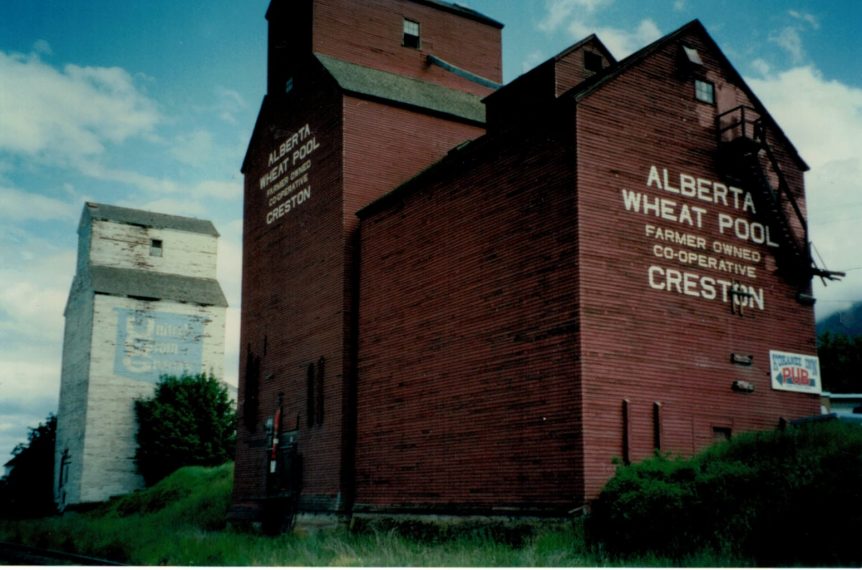
Today, July 4, is Canada Historic Places Day! So let’s explore (figuratively speaking, at least) the iconic historic buildings in Creston: the grain elevators.
Midland & Pacific built Creston’s first grain elevator (the white one now) in 1935. twenty-five men began working on it on the first of August that year. It took 225,000 feet of lumber to construct and had a total capacity of 60,000 bushels of grain. The first load of grain was delivered in early September.
The Alberta Wheat Pool elevator opened in 1936, with a 52,000-bushel capacity and a 40,000-bushel annex added in 1940. The Midland and Pacific elevator in Wynndel was opened the same year.

These elevators were all part of the Canadian Wheat Board, and there were some notable challenges there – most particularly with the quotas established by the CWB. Farmers in Creston were routinely getting much higher yields than those quotas allowed. In 1950, for example, the average yield off the flats was forty bushels per acre of wheat, and 100 bushels per acre of oats. CWB regulations required that food-grade grain be shipped through its elevators, which meant the farmers couldn’t sell their surplus yields. Granaries, filled with surplus wheat, popped up all over the flats, and two private elevators (Christensen’s, out on the flats, and Piper’s, on Valleyview Drive) were built to store and ship grain to dog food mills.
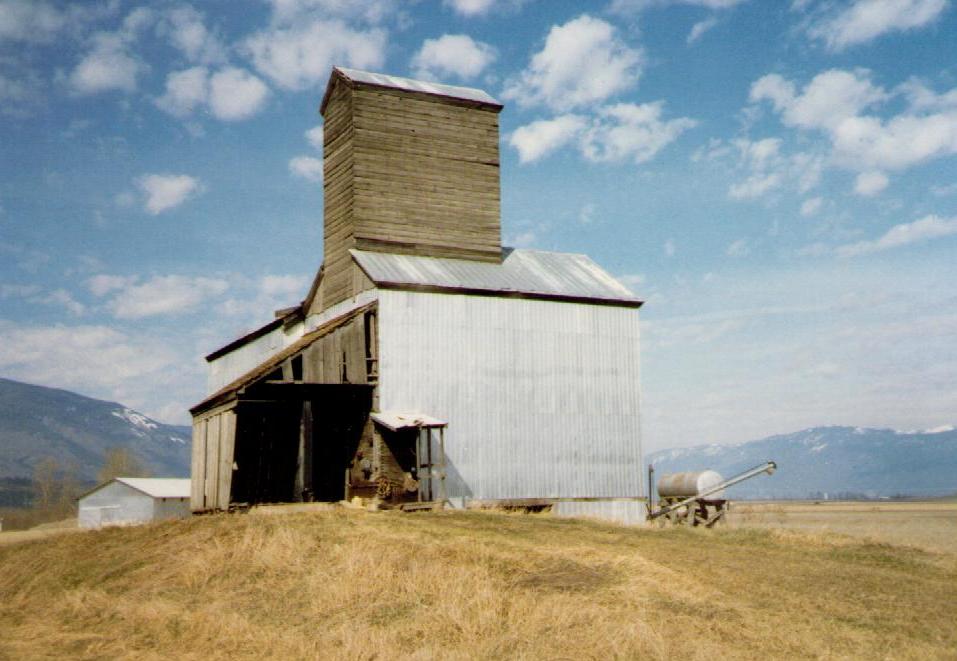
A combination of CWB policies, dropping prices for wheat, oats and barley, and a consequent shift to alfalfa, potatoes, clover and other crops resulted in a sharp drop in the amount of grain being shipped through the elevators. The Wynndel elevator and the former Midland and Pacific elevator downtown were sold to private owners in 1971; the Alberta Wheat Pool elevator was closed in 1982.
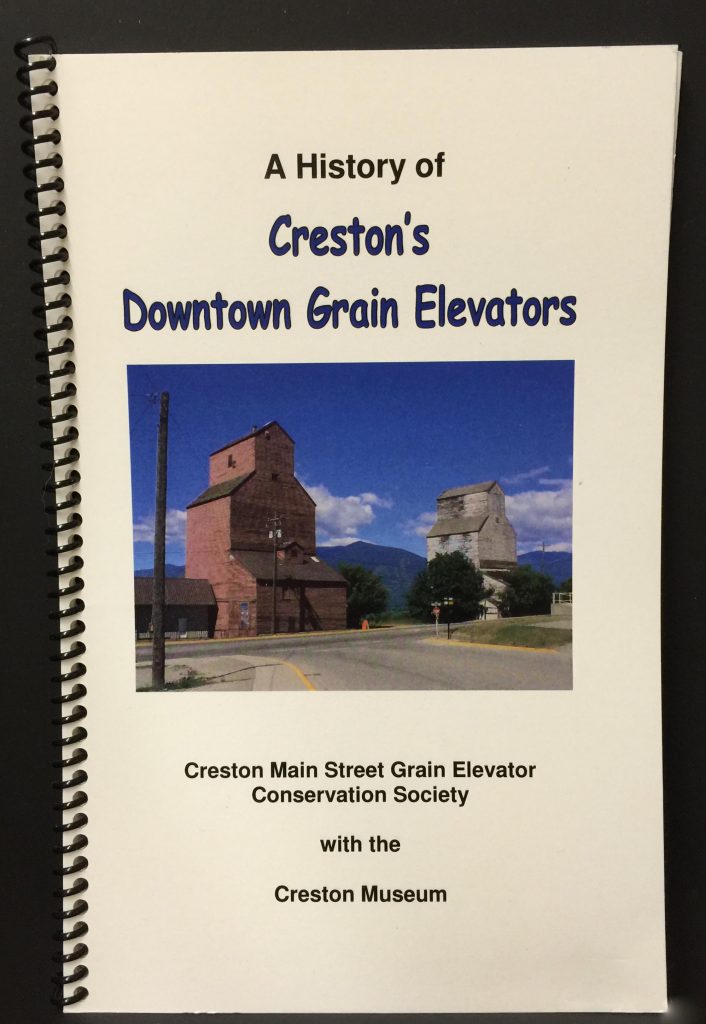
Want to know more about the local grain industry and the operation of a grain elevator? The Creston Museum has little booklets available for sale!