
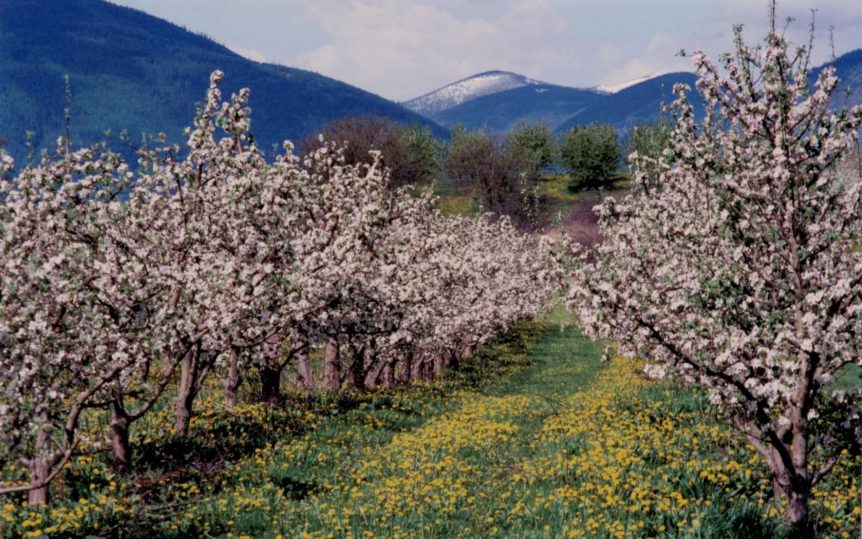
A couple of days ago, I showed you an intriguing map that names the owners of many of the orchard properties in Creston and Erickson. It reminded me of an article I wrote a number of years ago.
Originally published June 2012
No one saw it coming. No one was prepared for it, and, once it started, there was no stopping it. The problem itself was tiny – almost microscopic, in fact – but its effects were colossal. Hundreds of people were left struggling for a livelihood, and an entire industry was destroyed forever.
Locally, apples have, until recently, been the hugely-dominant tree-fruit crop. Nevertheless, in the early years, cherries were also an important crop. Although they couldn’t compete with apples for sheer volume, there were thousands of cherry trees in the Creston Valley and their produce represented a significant part of the income of local growers.
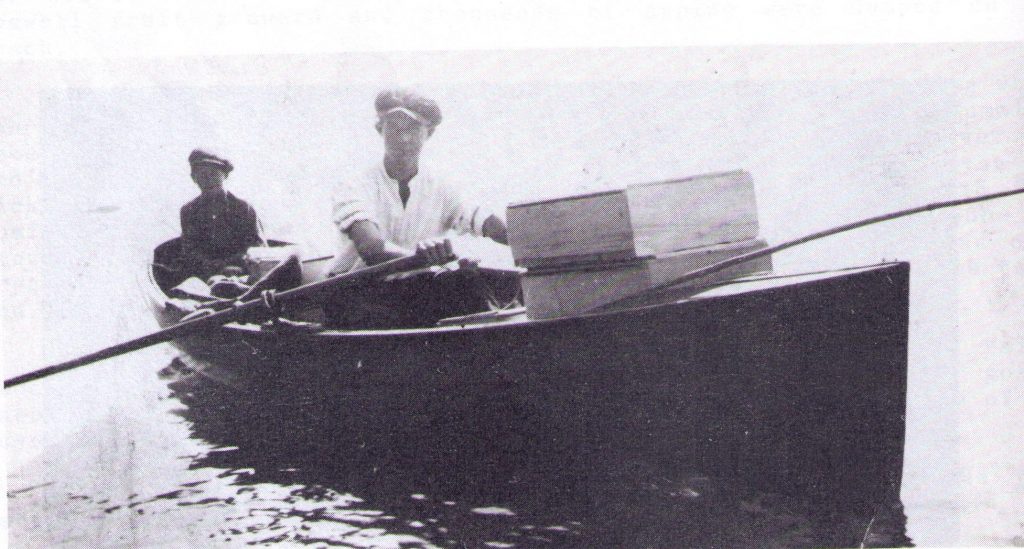
This is especially true of the orchard industry along the shores of Kootenay Lake. It was so important that a whole network of shipping and transportation facilities grew up around it. Tom Lymbery, whose family has owned the Gray Creek store for a century, says, “A daily ‘cherry special’ transport truck would catch the 4:30 PM Nasookin, one of the steamships that operated on Kootenay Lake, and if everything went okay they could have the fruit on the midnight passenger/express train out of Nelson, and on sale in Lethbridge and Calgary almost the next day.”
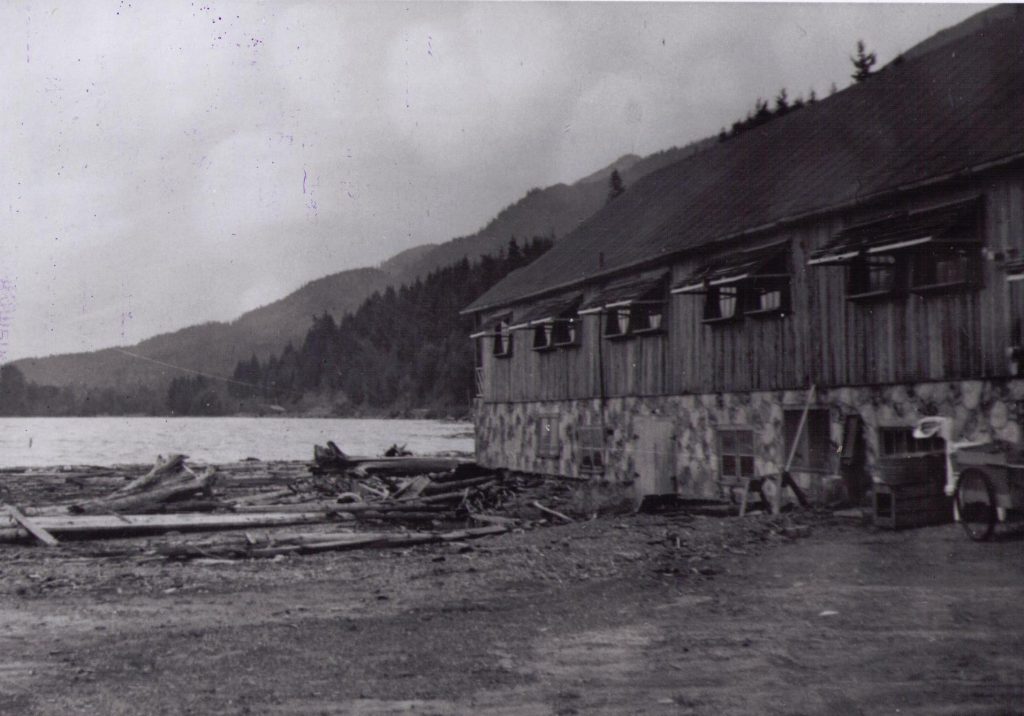
But it was not to last.
Little Cherry Disease is, just as its name implies, a disease of cherry trees that causes the fruit to be small and unflavourful – and therefore unsaleable. It was first detected in British Columbia in 1933, in a cherry orchard at Willow Point on the west arm of Kootenay Lake. It spread rapidly from there, and in less than twenty years had completely destroyed the cherry industry around the lake.
Little Cherry Disease is an imported disease. Though the first infected cherries were found at Willow Point, that may not be where the disease first landed when it arrived in the region. Opinions vary – Nelson, Kaslo, Blaylock’s mansion, or Willow Point – but everyone I’ve talked to agrees on one thing: Little Cherry Disease – which I’m going to abbreviate from here on as “LCD” – came to Kootenay Lake via ornamental flowering cherry trees from Japan. To quote again from Tom:
“The 500-foot depth of the main lake means warmer winters, deeper snow, and since the lake often holds cloud above on cold nights, the lowest temperatures are warmer than even a mile or two from the lake.” These isolated environmental conditions allowed the ornamental cherry trees, and consequently LCD, to flourish.
But if the problem had been merely a few diseased ornamental trees, LCD could never have had the impact it did on the local cherry industry – it could have been eradicated simply by destroying the diseased trees. No, the real problem was much, much bigger, and two-fold. First: What was causing the disease to spread, from one tree to another, and how could that spread be prevented? Second: Unless and until the spread of LCD was controlled, was there any way to save the cherry industry?
Chuck Truscott recalls working for Maurice Welsh, one of the researchers trying to identify the vector for LCD – the mechanism that allows the disease to spread. In the case of LCD, he told me, it was the apple mealybug, a tiny creature that, as an adult, is only three millimetres long. One way of controlling it is through a parasitic wasp, which was introduced to British Columbia in 1938, and which, by the late 1940s, had greatly reduced – though not eradicated – the spread of LCD. But by then, the cherry industry along Kootenay Lake was in ruins, and the one in Creston scarcely any better off.
In the meantime, researchers such as Jack Wilks, an entomologist with the Summerland research station, were working on an alternative: developing a variety of cherries that was resistant to LCD. Dr. Wilkes even took a trip to Japan to see if he could find an LCD-resistant variety. Ian Currie told me, “There were experimental plantings at Roy Dewar’s and Jack Hall’s places – cherry trees growing in screened-in buildings. They found a tree at Kootenay Bay, in the middle of an orchard, that didn’t have Little Cherry Disease, while all the ones around it did.” Tom added that the orchard was Bill Fraser’s Ledlanet Ranch, and that Dr. Wilks found that almost every orchard along the lake had at least one tree that appeared to be resistant.
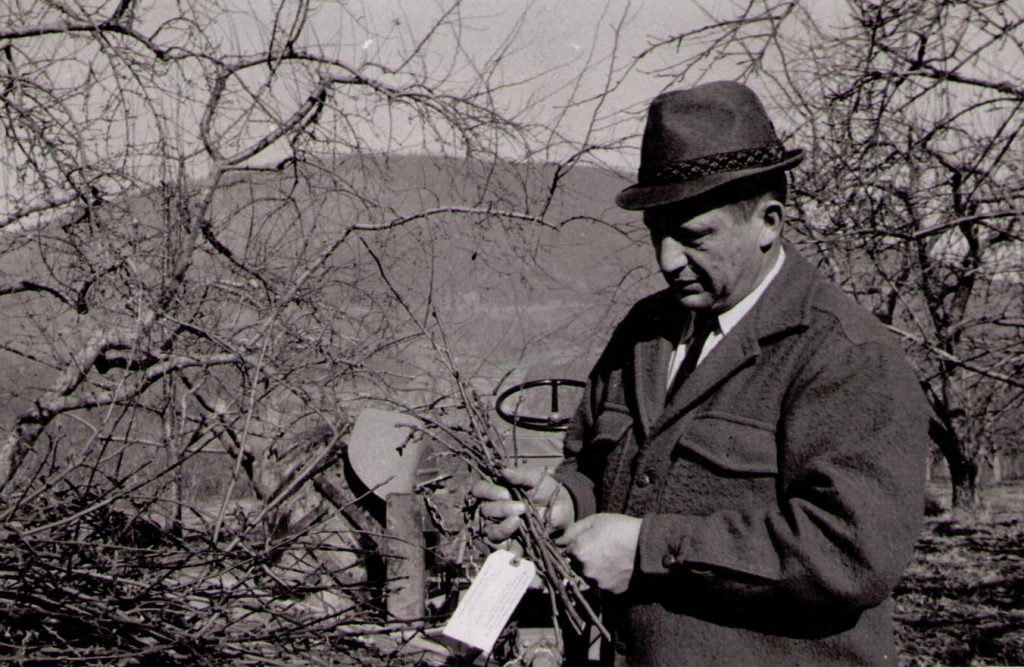
This was a very promising observation – if one tree was resistant, it should have been possible to develop a variety of cherries that would prove immune to the disease. The researchers certainly tried; as Ian says, “They took cuttings and developed the Kootenay Bay Lambert. A lot of people planted them, including my Dad; they had high hopes but nothing materialised.”
Spraying the mealybug-infested trees helped; so did the parasitic wasps – but they couldn’t eliminate the problem. A few isolated trees were resistant, but not nearly enough to sustain the industry. A facility at Harrop put the smaller cherries into barrels of brine to make maraschinos, but the market for them was lost to European competition after the Second World War. In the end, there was no other solution except destroying all the diseased trees, and this took decades to accomplish.
LCD-eradication efforts intensified in the early 1980s, with RDCK enacting a bylaw in 1983 that enforced the removal of diseased trees. Finally, by the 1990s, LCD was being well-controlled in the Creston Valley.
At about the same time, local apple growers were facing increasing competition from US apple growers and the resulting drop in apple prices. Cherry prices were substantially higher, making that crop considerably more attractive for local growers. These factors, combined with the control of LCD, helped cherries supplant apples as the dominant local tree-fruit crop, in Creston, at least – the cherry industry along Kootenay Lake has never recovered.
According to the provincial Ministry of Agriculture website, a second LCD-causing virus was detected in BC in 1999. Let’s hope this one doesn’t have the same effect as the original.